


Imagine this: You’re driving home after sunset, and suddenly one side of the road ahead seems darker. You realize one of your headlights isn’t working — the beam is gone, leaving half your path in shadow.
It may not seem like a big deal at first, but a broken headlight is more than just an inconvenience. It affects your visibility, your safety, and even your wallet if left unattended.
Whether it’s a cracked headlight, a smashed lens, or simply a burned-out bulb, understanding the real broken headlight repair cost can help you decide whether to fix, replace, or upgrade.
Let’s break it all down.
Why Fix a Broken Headlight Right Away?

A broken headlight isn’t just a small inconvenience — it’s a real safety hazard. When one of your headlights goes out, you lose more than half of your nighttime visibility. That means less time to react, less distance to see hazards, and a higher chance of being involved in a serious crash.
Think about driving through rain, fog, or a dark rural road. Without proper illumination, you may not spot pedestrians, cyclists, or animals until it’s too late. Worse, other drivers might not see your vehicle clearly, mistaking it for a motorcycle or misjudging its position on the road.
It’s not just dangerous — it’s often illegal. Many states, including Pennsylvania, require two fully functioning headlights at all times between sunset and sunrise, during rain, or whenever visibility drops below 1,000 feet. Driving with one headlight out can result in a traffic stop, fines, or even increased liability if an accident occurs.
Simply put: fixing a broken headlight right away can prevent an accident, a ticket, and even save lives. A quick repair today could mean the difference between a close call and a collision tomorrow.
What Causes a Broken Headlight?

Not all headlight problems come from the same source. Understanding the cause can help you decide whether you need a quick bulb change or a full repair.
- Burned-out bulb– The most common and simplest issue. Headlight bulbs wear out over time and may fail suddenly.
- Cracked or smashed lens– Caused by road debris or minor collisions. Even small cracks can let in moisture, reducing brightness.
- Wiring or fuse problems– If a new bulb doesn’t light up, the issue may lie in the electrical system.
- Condensation inside the housing– Often caused by poor sealing or physical damage, this fogs up the lens and weakens illumination.
- Improper alignment– A headlight aimed too high blinds other drivers; one aimed too low limits your road view.
- Complete assembly failure– Common after an accident or long-term exposure to vibration and weather.
Every one of these problems affects your visibility and your vehicle’s safety — and the longer you wait to fix them, the worse they can get. Clean, properly aligned, and fully functioning headlights are essential for both seeing and being seen on the road.
How Much Does It Cost to Fix or Replace a Broken Headlight?

So, how much does it actually cost to get a headlight fixed or replaced?
The answer depends on what’s broken — the bulb, the wiring, or the entire assembly — and whether you’re doing the job yourself or taking it to a shop.
In general, the more complex your headlight system (especially LED or HID setups), the higher the cost. Below is a clear 2025 breakdown to help you plan your repair:
Repair Type | Average Cost (Parts + Labor) | Details |
Headlight bulb replacement | $20–$100 | Simple halogen bulbs cost the least; HID and LED bulbs are more expensive but longer-lasting |
Cracked headlight repair | $100–$300 | If only the outer lens is damaged or fogged — often a quick fix |
Headlight wiring/switch repair | $125–$300 | Covers electrical faults, blown fuses, or moisture-damaged circuits |
Smashed headlight replacement | $300–$1,000+ | For complete assembly replacement; luxury or high-tech models may exceed $1,000 |
Lens restoration | $20–$200 | Professional cleaning or resurfacing to remove yellowing and restore clarity |
Pro tip: If your car has a sealed LED or HID headlight, expect higher repair costs — these often require replacing the entire unit rather than just the bulb.
Shop vs. DIY: What’s the Difference?

If you take your car to a professional mechanic, you’ll pay for both parts and labor. Depending on how easy it is to access the headlight housing, labor alone can range from $50 to $150 per hour. For many vehicles, replacing a bulb can take as little as five minutes, but on newer or luxury models, the process can stretch to nearly an hour.
At a shop:
- Basic halogen bulb replacement: $30–$300 total
- Full headlight assembly replacement: $300–$1,500+ total(depending on your vehicle)
If you’re comfortable working on your car, DIY repairs can dramatically lower costs. A standard halogen bulb can cost as little as $10–$20, and even high-intensity LED or HID bulbs rarely exceed $100 each. However, replacing an entire headlight assembly yourself could still run from $30 to $4,000, depending on your make and model.
Should You DIY or Go to a Mechanic?

If you have the tools, time, and patience, changing a headlight yourself can save hundreds of dollars. With online tutorials and manufacturer guides, it’s easier than ever to do simple maintenance at home.
However, if your issue involves wiring, alignment, or water damage, it’s best to visit a certified repair shop. Professional technicians can ensure your headlights are correctly aimed and sealed — preventing future issues and keeping you compliant with state lighting laws.
Bottom Line
Headlight repairs range widely in cost, but ignoring the problem can lead to much bigger expenses down the road — from traffic tickets to collisions caused by poor visibility.
Whether you handle it yourself or trust a professional, fixing a broken headlight right away is one of the simplest and smartest ways to stay safe on the road.
Cracked, Smashed, or Burned-Out: What’s the Difference?

Not every broken headlight needs a full replacement. Understanding the type of headlight damage helps you decide whether a simple repair or a complete headlight replacement is the smarter choice — and it can save you hundreds in headlight repair cost.
Cracked Headlight
If your headlight lens has a small crack but the light still works, you might only need to seal or replace the lens cover.
However, if moisture, dust, or condensation has already entered the housing, the safest option is to replace the full headlight assembly. Ignoring the issue can lead to foggy lights, electrical shorts, or premature bulb failure.

Smashed Headlight
A shattered or broken headlight usually means the housing, reflector, and beam alignment are compromised.
Driving with a smashed headlight is not only illegal in most states — it also creates serious safety risks and can cause short circuits in your car’s electrical system.
In this case, a complete headlight replacement is the only reliable solution.
Burned-Out Bulb
A burned-out bulb is the most common and easiest issue to fix.
Most halogen bulbs cost under $30, while LED or HID bulbs can range higher but provide longer life and better light output.
You can often handle a DIY headlight bulb replacement in a few minutes with basic tools, or have a professional shop do it for a small labor fee.
OEM vs. Aftermarket: Which Should You Choose?

OEM headlights are built by the same manufacturer that made your vehicle’s original lighting system.
That means:
Perfect fit and beam alignment — no modification needed
Factory-grade brightness and consistent color temperature
Longer lifespan and often backed by a manufacturer warranty
They’re also DOT and SAE certified, meeting strict U.S. safety standards. While OEM headlights typically cost more upfront, they’re the best choice for newer or luxury vehicles, or for drivers who want guaranteed performance and durability.
Many drivers who’ve tried cheap aftermarket units report poor beam focus, leaky seals, and reduced visibility — especially with unbranded imports. Choosing genuine OEM replacements avoids these risks entirely.
Aftermarket Headlights

Aftermarket headlights can be a cost-effective alternative, especially if you’re repairing an older vehicle or upgrading your car’s appearance.
They offer:
- Lower upfront cost— often 30–60% cheaper than OEM
- More design variety, including projector, smoked, or halo-style options
- Easier availabilitythrough online stores and auto parts retailers
However, quality varies widely. Some aftermarket assemblies — particularly low-cost imports — may use thin plastics, weak seals, or misaligned reflectors that lead to poor illumination and premature fogging.
If you choose aftermarket, stick with reputable brands such as TYC, Depo, or Anzo. These are often produced using original OEM tooling and meet DOT standards for road use. Avoid unbranded LED conversions or ultra-cheap listings; they might look bright but can cause glare and fail inspection.
Insurance & Safety Note
Insurance companies often push for aftermarket parts to lower repair costs after accidents — but not all aftermarket lights meet the same safety and performance standards as OEM equipment. For critical visibility components like headlights, quality matters more than cost savings.
Quick Takeaway
OEM Headlights | Aftermarket Headlights | |
Fit & Alignment | Perfect factory fit | Varies; may need adjustment |
Durability | Long-lasting, sealed design | Some prone to fogging or leaks |
Brightness & Focus | Consistent beam pattern | Quality varies by brand |
Cost | $$$ (premium) | $$ (budget-friendly) |
Best For | Newer or luxury cars | Older cars or style upgrades |
If you’re driving an older vehicle, a high-quality aftermarket light from a trusted brand can save money without sacrificing safety or performance. But for drivers prioritizing longevity, reliability, and OEM-level brightness, factory-original headlights remain the gold standard.
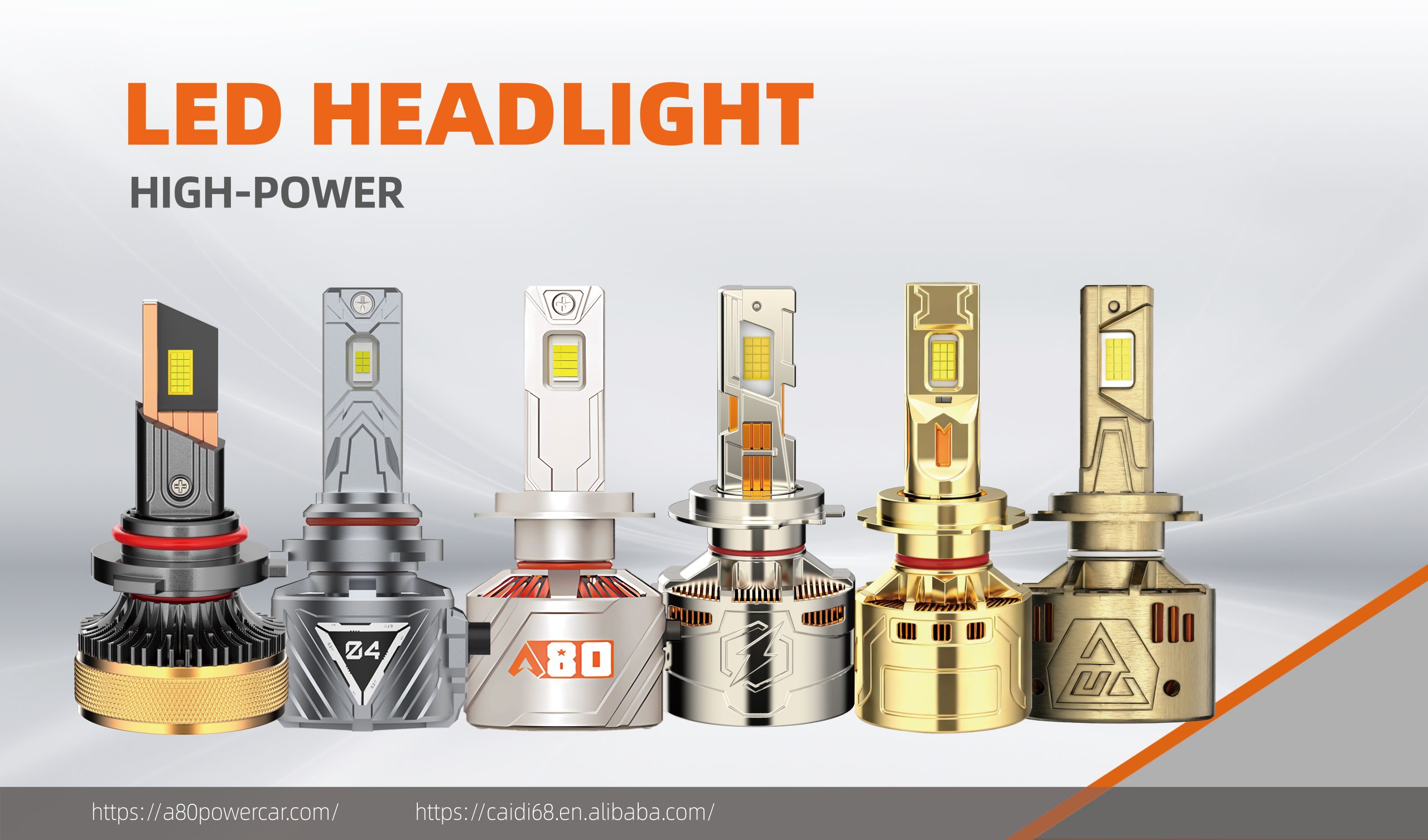
Now that you understand the difference between OEM and aftermarket headlights, if you’re looking for an LED upgrade with higher brightness, stable performance, long lifespan, and wide compatibility, A80’s core headlight models are built exactly for those needs.
About A80 Product – A80 Popular Headlights
A80 A13 LED Headlight
The A80 A13 LED Headlight delivers strong brightness, steady performance, and reliable cooling, making it a solid choice for a wide range of driving needs.
It supports multiple OE socket types, including H4, H7, H8, H9, H11, 9005, 9006, HB3, and HB4, offering broad compatibility for most vehicles.
With a total output of 160W per pair and 16,000 lumens, it provides a clear 6000K cool white beam designed to enhance nighttime visibility. The aluminum body ensures stable heat dissipation, allowing the light to run safely in temperatures from –40°C to 80°C.
Built for durability, the A80 A13 offers a lifespan of 50,000 hours and includes a 2-year warranty, making it a dependable upgrade for drivers seeking long-lasting performance.
Key Features:
- Compatible OE ports: H4 / H7 / H8 / H9 / H11 / 9005 / 9006 / HB3 / HB4
- 160W per pair output
- 6000K color temperature
- 16,000 lumens brightness
- Aluminum housing
- 50,000-hour lifespan
- Universal fit

A80 A14 LED Headlight
The A80 A14 LED Headlight is designed for drivers who want higher power, stronger brightness, and a lighting upgrade that makes the road ahead clearer than ever.
It supports H4, H7, H8, H9, H11, 9005, 9006, HB3, and HB4, offering wide compatibility and simple installation.
Delivering 220W per pair and a sharp 22,000 lumens output, the A14 produces a crisp 6000K cool white beam that cuts through darkness, rain, and fog with ease.
Its aluminum body, IP67 waterproof rating, and steady performance from –40°C to 80°C make it ideal for harsh weather or long-distance driving. With a 50,000-hour lifespan and CE + RoHS certification, the A14 is a powerful and reliable upgrade.
Key Features:
- Wide OE compatibility
- 220W per pair
- 22,000 lumens
- 6000K cool white
- IP67 waterproof
- Aluminum body
- 50,000-hour lifespan

How to Prevent Future Headlight Damage

You can’t stop every rock on the road, but with the right habits, you can extend your headlights’ lifespan and keep them crystal clear for years. Preventing oxidation, yellowing, and cracking starts with proper headlight maintenance and UV protection.
Wash and wax headlights regularly – Dirt, salt, and road grime speed up oxidation. Use a gentle car shampoo and apply wax or sealant every few months to add a protective layer.
Park in shaded or covered areas – Direct sunlight is a major cause of UV damage. Whenever possible, park in a garage or use a sunshade to block harmful rays.
Replace bulbs in pairs – This ensures even brightness and reduces stress on the electrical system. Uneven light output can cause one side to overheat or wear faster.
Seal small cracks early – Even tiny chips can let moisture in, leading to fogging or internal corrosion. Use a clear sealant or headlight restoration kit to fix damage promptly.
Apply UV-resistant clear coat or protective film – After polishing or restoring cloudy headlights, always reapply a UV clear coat or cover them with PPF (paint protection film) like XPEL. Without protection, the bare plastic can re-yellow within months.
Avoid over-polishing – Each sanding or polishing session removes a thin layer of the factory UV coating. Only polish when necessary, and protect the surface immediately afterward.
By combining regular cleaning, UV protection, and quick repairs, you’ll dramatically slow down oxidation and extend the lifespan of your headlights — keeping them brighter, safer, and better-looking for years to come.
Conclusion
A broken headlight might seem minor, but the repair cost can vary dramatically depending on the issue — from a quick headlight bulb replacement cost of just $20 to a cracked headlight repair cost of $300, or even a smashed headlight replacement reaching $1,000+.
If you’ve been wondering, “How much does it cost to get a headlight changed?” or “How much does it cost to get headlights replaced?” — the answer depends on your car’s lighting system, whether it’s halogen, HID, or LED.
The good news? You don’t always need to spend a fortune. Affordable replacement options and affordable LED headlights are now widely available, offering brighter performance, longer lifespan, and better energy efficiency than traditional bulbs.
No matter what, fixing your headlight promptly protects your safety, prevents tickets, and keeps your vehicle looking and performing its best. In short: a small repair today can save you a much bigger expense tomorrow.


